




Should You Buy a Copper-Infused Face Mask for Covid-19 Protection?

Updated: Apr. 13, 2021





Can copper-containing face masks offer more protection against the virus that causes Covid-19? Here's what the science says.
Using copper face masks
We now have vaccines for Covid-19, but it’s still important to wear a face mask. Not everyone has received a shot (or can get it), and scientists still don’t know for sure if the vaccines we have will protect against new variants of the virus.
The Centers for Disease Control and Prevention (CDC) has even suggested double masking—wearing a disposable mask with a cloth mask—to stop respiratory droplets from spreading. But what about copper-infused masks?
“Copper can inactivate SARS-CoV-2 [the virus that causes Covid-19], but we can’t say anything directly about copper masks,” says Michael Schmidt, a professor of microbiology and immunology at the Medical University of South Carolina in Charleston.
This is what you need to know about copper face masks for Covid-19.
Copper and medical history
Copper has a long history in medicine, starting with the Bronze Age. That’s when its antiviral and antibacterial properties were first noticed, says Schmidt. In those early days, women observed that people who drank from copper vessels were less likely to get diarrhea. Drinking establishments of old installed copper bars to reduce food poisoning.
Building on previous research, Schmidt coauthored a paper, which he published in 2013 in Infection Control and Hospital Epidemiology, showing that copper surfaces cut the number of infections in intensive care units, including those from antibiotic-resistant organisms.
How does copper prevent infections? It conducts electricity. (That’s why copper wiring used to be so widespread.) “The copper is constantly moving electrons,” Schmidt explains. “It destabilizes the outer membrane structure of the organism. It literally causes bacteria to die very, very quickly.”
Copper-infused socks and underwear
In addition to being antiviral and antibacterial, copper is also antifungal, says Schmidt. You might be thinking that sounds stiff and painful! But that’s not the case.
“The fabric doesn’t feel metallic,” says Schmidt. “It feels like polyester. The metal is literally blended so they’re polyester-cotton socks.”
The Israeli army enlisted copper-impregnated socks and underwear to fight fungal infections in soldiers, he says. The socks have even been proposed as a way to stave off diabetic foot infections, though there’s currently no evidence to support this.
In 2010, socks containing copper oxide particles were lowered to the 33 miners who were trapped in a collapsed Chilean mine. After they were rescued, 19 of the miners responded to a survey about the socks. The miners reported that the socks helped reduce athlete’s foot and other skin ailments resulting from the hot, humid environment, according to a 2012 correspondence in JAMA Dermatology.
It’s worth noting, however, that the lead author of the study works for Cupron, the company that makes the socks and donated them to the miners. What’s more, the study didn’t include a control group of copper-free socks—it’s possible any type of sock might have led to improvement in skin ailments.
Copper masks for influenza
During the 2010 H1N1 influenza (swine flu) pandemic, researchers publishing in PLOS One showed that copper oxide masks filtered more than 99.85 percent of aerosolized particles from two different flu viruses.
But as with the study on copper socks above, most of this study’s authors work for Cupron, the company that makes copper-based antimicrobial fabrics.
Copper masks for Covid-19
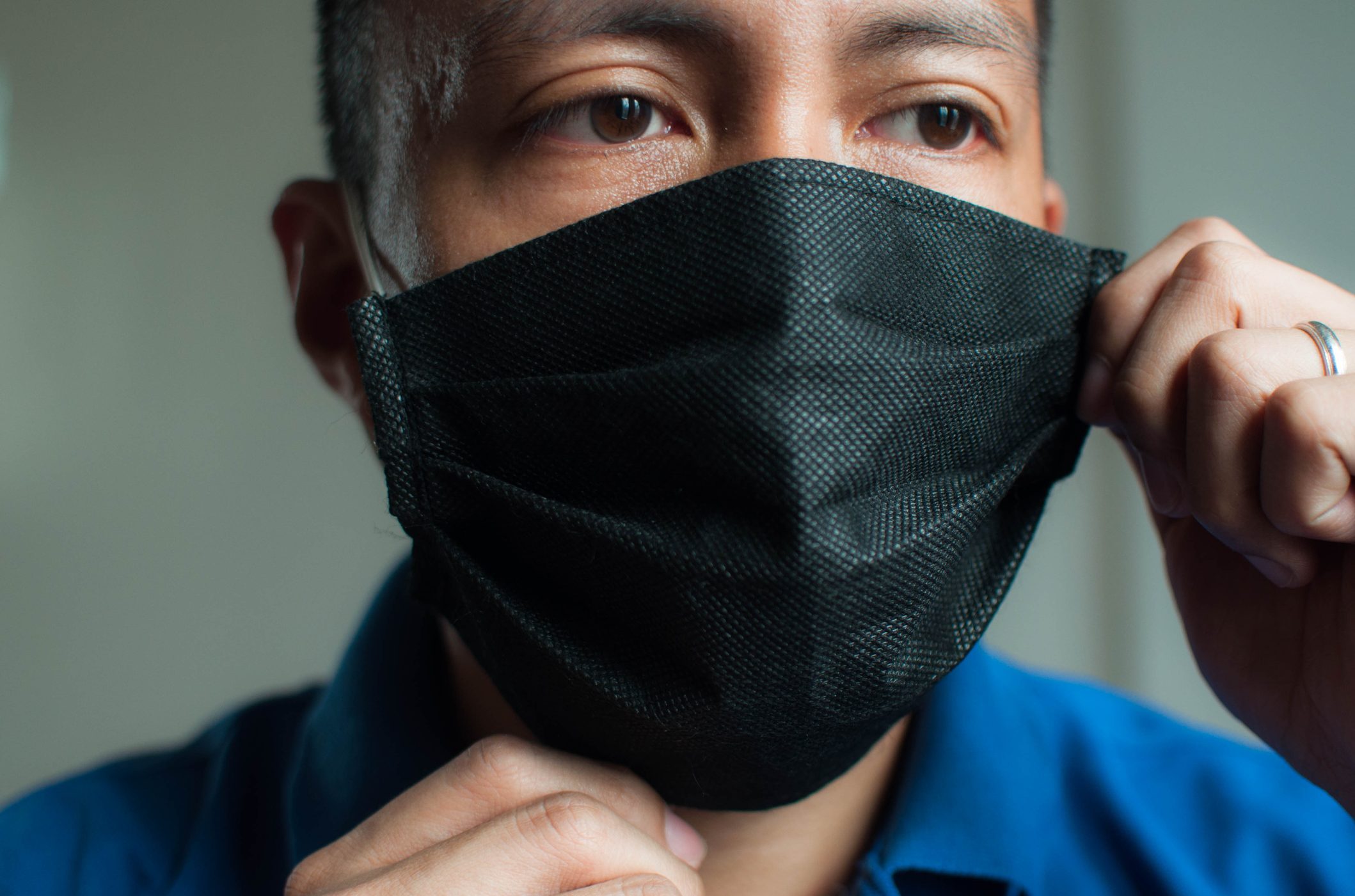
Might copper provide antiviral properties for Covid-19 masks? Unfortunately, even though copper masks have swamped the market, there hasn’t been much research.
“You need a special lab to work with Covid-19—a Biosafety Level 3 lab—and there are very few across the globe,” says Schmidt.
One study showed that putting SARS-CoV-2 on a copper surface killed it within 10 minutes. But there are some major caveats.
The study was not peer-reviewed, a process that ensures high standards. Plus, this study was conducted using cells, not humans. Lab studies like this are forms of very early research, but trials in humans are needed before researchers can say whether copper kills Covid-19.
Another study, published in The New England Journal of Medicine in 2020, reported that the virus lasted about four hours on a copper surface. Like the above study, this was conducted in a lab, not humans.
The two findings are vastly different in terms of how fast copper might kill SARS-CoV-2. There were differences in how each experiment was carried out, which may explain the contrasting results.
Caveats about face mask research
Often mask-related studies have been done in a lab—without human subjects. That makes it tough to say how the mask would react to person-to-person transmission.
“Most of these studies look at putting the virus onto the masks and seeing if the mask kills the virus,” says S. Wesley Long, MD, medical director of diagnostic microbiology at Houston Methodist. “That could be good, but it doesn’t tell us whether the mask prevents transmission.”
Should I buy a copper mask for Covid-19?
On February 10 of this year, the Environmental Protection Agency announced that certain high-percentage copper alloys did indeed protect against SARS-CoV-2 and other viruses. That means that copper alloy products can now claim that they kill certain viruses. The products will be added to the Agency’s List N Appendix of antimicrobial products that kill viruses within two hours of coming into contact with them.
That doesn’t mean all copper masks out there are effective, which can make deciding on a copper face mask tough for shoppers. Some copper masks may not contain enough copper and may not have been tested. The Food and Drug Administration has issued warnings about fraudulent Covid-19 products.
Copper-containing face masks probably won’t harm you, but don’t use one if you’re allergic to copper, says Dr. Long.
(Learn more about cleaning products that can kill SARS-CoV-2.)
The bottom line
Copper masks may be useful against SARS-CoV-2, but you’d have to have a carefully constructed mask that’s been scientifically tested. The important thing is to wear a mask and keep wearing a mask.
You can try double masking, but a single, high-quality, good-fitting mask is probably the best thing, says Dr. Long. And don’t forget to maintain a safe social distance and wash your hands frequently with soap and water.
Next, here are more tips on how to prevent coronavirus.

- Centers for Disease Control and Prevention: "Improve How Your Mask Protects You"
- Michael Schmidt, PhD, professor of microbiology and immunology at the Medical University of South Carolina in Charleston
- Infection Control and Hospital Epidemiology: "Copper Surfaces Reduce the Rate of Healthcare-Acquired Infections in the Intensive Care Unit"
- American Chemical Society: "Can Copper Save Us from the Coronavirus?"
- Medical Hypotheses: "Reducing the risk of skin pathologies in diabetics by using copper impregnated socks"
- JAMA Dermatology: "Resolution of Skin Maladies of the Trapped Chilean Miners: The Unplanned Underground Copper-Impregnated Antifungal Socks 'Trial'"
- PLOS One: "A Novel Anti-Influenza Copper Oxide Containing Respiratory Face Mask"
- S. Wesley Long, MD, PhD, medical director of diagnostic microbiology at Houston Methodist
- BioRxiv: "Rapid inactivation of SARS-CoV-2 on copper touch surfaces determined using a cell culture infectivity assay"
- The New England Journal of Medicine: "Aerosol and Surface Stability of SARS-CoV-2 as Compared with SARS-CoV-1"
- Environmental Protection Agency: "EPA Registers Copper Surfaces for Residual Use Against Coronavirus"
- Environmental Protection Agency: "List N Appendix: Supplemental Residual Antimicrobial Products for Coronavirus (COVID-19)"
- Food and Drug Administration: "Fraudulent Coronavirus Disease 2019 (COVID-19) Products"
Originally Published: March 18, 2021

