


9 Silent Signs You’re Not Taking Good Care of Yourself


Updated: Aug. 11, 2023





Even if you live a healthy life, it may not be enough. Doctors share the signs your body might need better nutrition, less stress, or more sleep.
Try to make your health a priority
If you don’t have any medical issues you’re in luck, but there could still be room for improvement when it comes to your wellbeing. In fact, things you brush off on a daily basis could be signs that you’re actually not taking such great care of yourself. Read on to see if you’re experiencing any of these symptoms—and how to avoid their causes.

You’re having major brain fog
After what you considered a good night’s rest, you wake up feeling spacey, and you walk out the door without your wallet. Don’t just chalk up forgetfulness to aging, says Martin G. Bloom, MD, a cardiologist and functional medicine expert. Brain fog can be linked to things like poor sleep and stress but Dr. Bloom says brain fog can also be indicative of something more serious, like a hormone imbalance that impacts cognitive issues, for example. For women especially, mind lapses may indicate a dysfunctional thyroid. “Consider a comprehensive blood test that measures all of your hormones and biomarkers, and a complete thyroid test that not only measures your thyroid hormones but also possible thyroid antibodies, to determine the root causes of your brain fog,” he says.
Because your intestinal microbiome can impact the rest of your body, healthy eating may bring greater clarity and ability to concentrate. “Most patients are amazed by the difference a healthy gut can make in their cognitive function. They report feeling sharper, smarter, and quicker with an improved ability to focus, remember things and complete mental tasks,” Dr. Bloom says. Eating more probiotic foods could help balance your microbiome. (Here are the 50 best healthy eating tips of all time.)

Your sex drive is low
The demands of work or parenting can drive down desire; so can decades of partnership, for some couples. While your libido will ebb and flow, if you never have the urge, says Dr. Bloom, your hormones may be out of whack. Talk to your doctor about lab testing to analyze your hormones, such as testosterone, estradiol, estriol, progesterone, and more. Hormone imbalances may be associated with more serious conditions, like fatigue, depression, weight gain, and even heart troubles. “The hormone test will act as a roadmap, and 99 percent of the time testing will uncover the root causes,” Dr. Bloom explains. (Don’t miss these 10 ways to stop being so hard on yourself.)

You’re super stressed out
Whether it’s work, family, relationship, or general concern with the world we live in, constant stress can affect your health. The stress hormone cortisol can stay elevated, says Dr. Bloom: “When cortisol levels are unbalanced or spiked, this can cause us to feel moody, anxious, depressed, or suffer from poor cognitive function–all equating to lower libido and self-worth. High cortisol can also cause an increase of body fat and inflammation, which can lead to less self-confidence, frustration, and reduced energy and overall well-being,” he says. Sounds like it’s time to take a mental health day.
As with brain fog, Dr. Bloom encourages patients to start the road to relaxation via their gut. “Stress is something that can be managed and fixed with the right support, and reduced stress can be a major player in improving your overall health and quality of life,” he adds. (Check out these 22 powerful ways to remind yourself that you’re worthy.)

You feel sleepy all the time
Apart from carving out time to exercise and taking care to follow a good diet, your nightly slumber is a key component to your health. So when you’re struggling to fall and stay asleep or you just feel like you can never get enough snooze-time, talk to your doctor ASAP, advises Dr. Bloom. You might be fighting sleep apnea—a sleep disorder in which your airway collapses and disrupt your sleep cycle throughout the night. The condition is linked to high blood pressure, weight gain, and heart disease. Sleep is also crucial for resetting your internal clock, says Dr. Bloom: “In the perfect scenario, your body will have an amazing regenerative sleeping pattern,” he explains. “As we age and some of these internal hormone levels become unbalanced, and this can cause a domino effect of imbalances and deficiencies, thus causing poor sleep.” A simple chat with your doctor can alert him or her to the tests you may need to discover what’s not cycling correctly in your body, helping them to change the pattern and give you the Zzz’s you need. (Don’t miss these 50 tips to help you feel less lonely.)

You have muscle twitches in your legs
If you spend the majority of the day sitting at a computer or in front of a TV, you may not think twice about the occasional muscle twitch or cramp in the leg. However, the medical director at the Carillon Miami Wellness Resort, Adonis Maiquez, MD, warns frequent spasms in your muscles can indicate low magnesium levels. Over time, it can pose health issues. “It carries a risk of cardiac arrhythmias [abnormal heartbeats],” he adds. To help alleviate the random flinch, Dr. Adonis (he’s known by his first name) recommends increasing your consumption of magnesium-rich foods like almonds, pumpkin seeds, and bananas. Or, if your doctor suggests you require an even higher amount of this essential vitamin, consider a supplement.

Your hands and feet tingle
The occasional buzz or goosebumps episode is fine, but if your hands and your feet tingle regularly, says Dr. Adonis, you might have a vitamin B12 deficiency. Left untreated, this lack of an essential nutrient can lead to anemia. To ensure you’re well balanced, consume foods like eggs, meat, and dairy. (Only animal products typically contain vitamin B12.) If you lead a vegetarian or vegan lifestyle, a B12 supplement can help with adequate intake. Here are 10 health tweaks you need to make in your 40s.
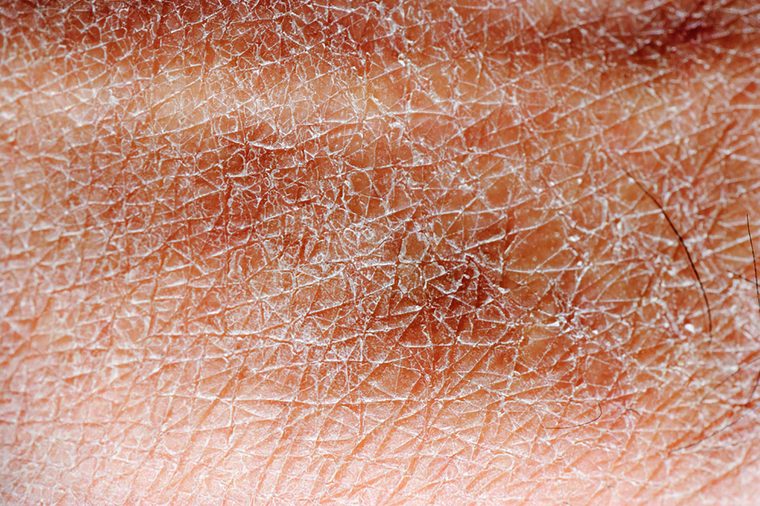
Your skin is super dry
Dry skin is especially a concern during cold weather. And although dry skin is much more likely to be weather-related, you should still always keep an eye on hot spots: According to Janet Prystowsky, MD, those itchy flaky spots could be a clue that your low-fat diet is behind a fatty-acid deficiency. In addition to adding a daily moisturizer that’s compatible with your skin type, she recommends adding more good-for-your-fats to your daily menu. These could be avocados, walnuts, olives, and more healthy fats.

You’re breaking out
Though acne is largely a genetic and/or hormonal condition, says Joshua Zeichner, MD, director of cosmetic and clinical research in dermatology at Mount Sinai Hospital in New York City, there are several factors that could be enticing an unfortunate zit (or five) to erupt more frequently. “Stress may trigger a flare up,” he says. “It has been well-documented that stress in the workplace or in school during testing periods is associated with worsening of acne,” he says. “When you sleep, cortisol levels naturally go down.” Other culprits could be consuming too many sugary and starchy foods, which lead to high blood sugar levels, encouraging inflammation. Dr. Zeichner adds cow’s milk, with a big emphasis on skim milk, is also associated with flare-ups, too.

You’re always tired in the afternoon
After sitting through more than a handful of meetings you didn’t actually need to attend, you might find yourself counting down the minutes until it’s time for a snack or coffee break. But if you consistently feel like an afternoon pick-me-up, says Tania Dempsey, MD, you might be reaching for the wrong foods at lunch time, causing you to lose your stamina long before you head home for dinner. She explains that carbohydrate-rich foods, like pizza, sandwiches, or other bread-based meals, can cause your blood sugar to spike and then crash a few hours later. “Low blood sugar, also known as hypoglycemia, can cause the sleepiness and fatigue that people get in the afternoon without them realizing why they feel that way,” she says. To save you from searching out something sweet or caffeinated, Dr. Dempsey says to focus on mid-day meals that are balanced with protein, fat, and fiber-rich vegetables to maintain your blood sugar levels. (Next, try these 51 brilliant health tips you’ll want to make a habit.)
- Martin G. Bloom, MD, a cardiologist and functional medicine expert
- Adonis Maiquez, MD, the medical director at the Carillon Miami Wellness Resort
- Janet Prystowsky, MD
- Joshua Zeichner, MD, director of cosmetic and clinical research in dermatology at Mount Sinai Hospital in New York City
- Tania Dempsey, MD
- U.S. National Library of Medicine: "Vitamin B12 deficiency anemia"
 Medically reviewed by
 Originally Published: November 01, 2017

