


Home Beauty Face and Body Care
9 Surprising Things You Don’t Realize Are Causing Dark Under-Eye Circles


Updated: Apr. 15, 2021





Lack of sleep isn't the only thing to blame for those pesky under-eye circles. Learn what you can do to avoid them.
Things you can and can’t control may cause dark under-eye circles
Don’t be so quick to blame your dark under-eye circles solely on a lack of sleep. Although some causes for dark under-eye circles are under our control, others are unavoidable. Here’s what you can and can’t change, and everything you need to know about those dark circles under your eyes.

Sleeping on your side or belly
Again, while most people believe a lack of sleep is the solitary reason behind dark circles under your eyes, the way you sleep could be the true culprit. If your sleeping position tends to be lying on your side or your belly, your face will fold into the pillow and put strain around your eyes. Harold Lancer, MD, a dermatologist in Beverly Hills, California, notes, “Try to sleep on your back, which doesn’t just benefit your face, but also prevents wrinkles from potentially forming on your chest. You may also want to consider sleeping with an extra pillow when your eyes are extremely puffy, since elevating your head will get the fluid to move away from your lids.” Find out the best sleep positions for common health problems.

Sunlight
If the area under your eyes happens to look more brownish in tone, it may be due to natural pigmentation. “The skin around the eyes is also very sensitive to hydration or lack thereof and is also constantly exposed to the environment. Therefore, it is subject to sun damage,” says Joshua Zuckerman, MD, a plastic surgeon in New York. Because the sun signals melanin production, sun exposure will aggravate the appearance of crow’s feet and dark circles. As a solution, be sure to invest in a good pair of sunglasses that are labeled 100 percent UV protection or UV 400 protection to efficiently block the sun’s rays. This is how to pick out the best sunglasses for your face shape.

Too much salt or caffeine
You may notice that if you indulge in a salt-heavy meal before you go to bed, you’ll wake up with bags under your eyes. Certain foods with high levels of sodium and caffeine content will cause your body to retain water, aggravating the skin under the eyes and making them appear darker. If you find it too hard to sacrifice the coffee (trust us, we understand), Ami Mallon, global corporate educator for Osmosis Skincare based in Denver, recommends counteracting this condition with ingredients like niacinamide (a form of vitamin B3). Research published in the Journal of Clinical and Aesthetic Dermatology shows that niacinamide reduces water loss and also improves skin texture and fine lines. “Niacinamide also has anti-inflammatory and antioxidant benefits,” she says. “Bearberry extract is also a wonderful and natural skin lightener and can help brighten under your eyes.” Here are other signs you’re eating too much sodium.
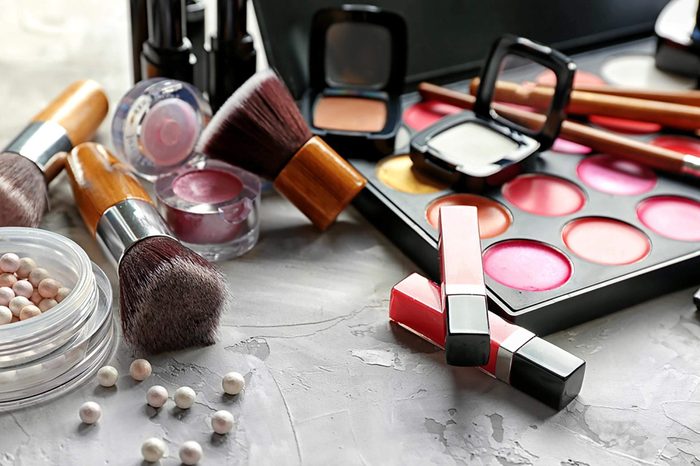
Makeup products
Makeup is supposed to cover up our dark circles under eyes, right? While it may seem counterintuitive, using a bad product can actually irritate your skin and lead to worsened circles. According to Rebecca Lee, RN, a registered nurse and founder of the natural health resource, Remedies For Me, in New York, “Makeup is supposed to hide discolorations and imperfections, but if your specific makeup brand is not well tolerated by the body, it can actually cause the exact opposite. Whether it’s an eyeliner, mascara, concealer, or a powder, it could cause irritation or an allergic reaction.” To stay on the safe side, if you notice your under-eye area looking particularly rough after using a new product, steer clear. Here are ways your makeup might be making you sick.
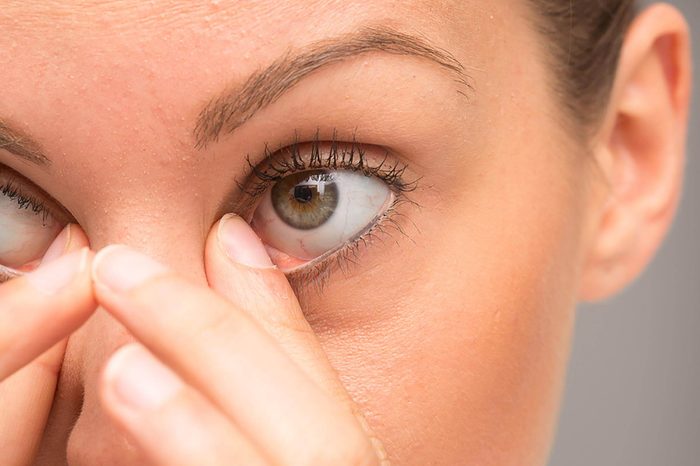
Scratching or rubbing your eyes
Itching, rubbing, scratching, you name it: all of it can lead to dark circles under eyes. If you happen to rub them instinctively in the middle of the night and are in dire need of an immediate fix, Tsippora Shainhouse, MD, board-certified dermatologist in Santa Monica, California, recommends hemorrhoid creams to temporarily shrink the vessels; it’s a handy modeling trick used before photoshoots. If you have a bit more time on your hands, consider cold cucumbers on the eyes—they are cooling, soothing, and they have many anti-inflammatory skin benefits, per research published in the Journal of Aging Research & Clinical Practice. It’s not a bad idea to also avoid these foods with way more salt than you realize.

Genetics
Unfortunately, sometimes dark circles can just be hereditary (and is actually one of the most common causes of them). If the skin around your eyes is fragile, transparent, and extremely thin, it will make it easy for blood to show through. Dark circles will tend to show more like a bluish tint and may get worse with age due to the loss of subcutaneous fat. “There are three types of enlarged blood vessels: they can be purple, blue, or pink,” says Neal Schultz, MD, a dermatologist based in New York, and host of DermTV.com and creator of BeautyRx by Dr. Schultz. “And there are two types of shadows that cause them: One shadow comes from the bulge of fat from the lower lid as we get older and the other comes from fine wrinkling of the lower lid skin, which appears as parallel lines. When light hits them from above, it causes shadows just like light hitting open flat, parallel blinds.” Your best bet may be to seek out your dermatologist so they can help you treat them as effectively as possible. Here are other ways your mom’s health can affect you.

Too many hours in front of the computer
Staring at a computer all day can put a lot of stress on the blood vessels around the eyes, which are forced to work harder without proper rest. According to Maricela Lewis Watson of The Shoreditch Spa, in Shoreditch, East London, “When the blood vessels get bigger around your eyes, it makes the skin surrounding them look darker. This happens when the body produces more cortisol to combat the added stress that the eye muscles are under.” If you’re in a job that mandates hours spent in front of a computer screen, frequently take small breaks—even if for 30 seconds every hour—to look away and give your eyes some time to recover. (This is how to help your body recover from a day of sitting.)
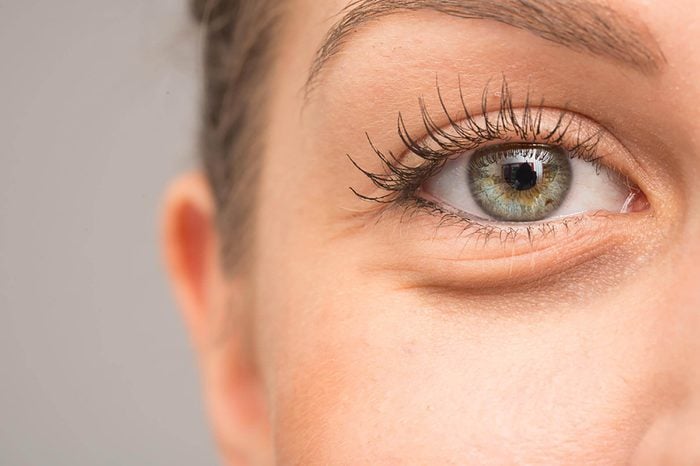
Fluid retention
Fluid retention will cause blood to pool underneath your eyes and produce a darkened appearance. According to Mahmoud Khattab, MD, a physician at Precision MD in Chicago. “There are many reasons your body might retain fluids: hormone levels fluctuating temporarily with your menstrual cycle or aging, a high salt diet, medications that encourage fluid retention, and changes in the weather (particularly hot, humid days).” Other reasons may include chronic disorders that increase lower lid sagging by increasing water retention such as thyroid disease, kidney disease, and heart ailments. If you do happen to notice your under-eye circles worsening after taking a new medication, consult your doctor for a prescription change. (Check out the best eye creams for dark circles, according to dermatologists.)
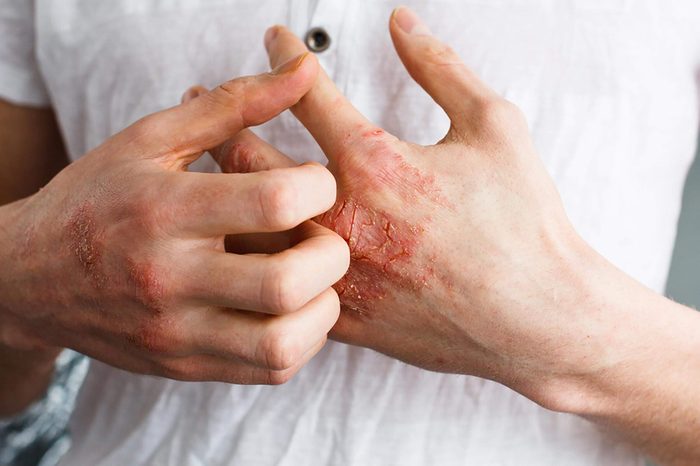
Allergies
Allergic reactions, dryness, and eczema symptoms are some of the most common symptoms that lead to patients’ dark circles, says Lee. “Allergies cause the body to release histamines that cause blood vessels to dilate,” she says. “Excessive rubbing to soothe itchiness or irritation can also cause increased inflammation, swelling, and broken blood vessels around the eye.” If you find yourself suffering from allergies, try taking an antihistamine or taking pseudoephedrine to reduce swelling. Here are 12 other natural allergy remedies that are sure to provide relief.
- Harold Lancer, MD, dermatologist, Beverly Hills, CA.
- Joshua Zuckerman, MD, plastic surgeon in New York, NY.
- Rebecca Lee, RN, a registered nurse and founder of the natural health resource, Remedies For Me, New York, NY.
- Ami Mallon, global corporate educator for Osmosis Skincare, Denver, CO.
- Tsippora Shainhouse, MD, dermatologist, Santa Monica, CA.
- Neal Schultz, MD, dermatologist, host of DermTV.com, creator of BeautyRx by Dr. Schultz, New York, NY.
- Mahmoud Khattab, MD, a physician at Precision MD, Chicago, IL.
- Maricela Lewis Watson, The Shoreditch Spa, Shoreditch, East London, GB.
- The Journal of Investigative Dermatology: "The Use of Botanical Extracts as Topical Skin-Lightening Agents for the Improvement of Skin Pigmentation Disorders"
- The Journal of Clinical and Aesthetic Dermatology: "The Tricky Tear Trough A Review of Topical Cosmeceuticals for Periorbital Skin Rejuvenation"
- The Journal of Aging Research & Clinical Practice: "EVALUATING THE POTENTIAL BENEFITS OF CUCUMBERS FOR IMPROVED HEALTH AND SKIN CARE"
Medically reviewed by Originally Published: October 12, 2017

