


11 Natural Cough Suppressants You Might Already Have at Home

Updated: Apr. 11, 2023





Whether it's a dry cough, a burning cough, or whatever's got you down, licensed healthcare clinicians helped us round up the natural cough suppressants that are probably already hiding in your cupboard to help.
Our editors and experts handpick every product we feature. We may earn a commission from your purchases.

Coughing in public has always felt awkward…but for the past three years, a small coughing jag can make you feel like you’re wearing a scarlet letter (even in those non-contagious scenarios, such as seasonal allergies or improperly swallowing food or water). A cough was one of the first tell-tale symptoms of COVID-19, but a cough can mean cold, flu or RSV, too—all of which are contagious. Fortunately, if you know about natural cough suppressants, you’re better equipped to handle the more chronic type of coughing before it’s necessary to order cough medicine delivery from the local pharmacy.
We spoke to experts—including two naturopaths, an internist, a couple acupuncturists and a dietitian—who guided us in rounding up natural cough suppressants you probably already have hiding in your cupboard.
Honey
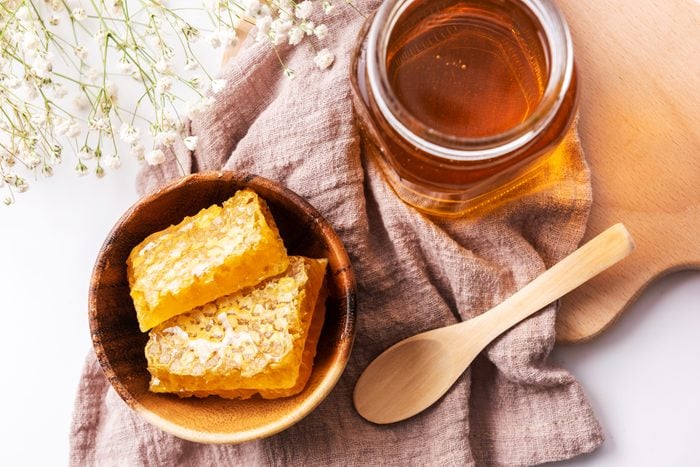
Across the board, our experts are fans of honey as a natural cough suppressant. Honey is a home-remedy staple, and at least one clinical trial showed that it may work as well as over-the-counter medicines such as dextromethorphan and diphenhydramine. “Honey has been used for centuries as a natural cough suppressant,” says Jerry Bailey, DC, LAc, Certified Nutritionist and Acupuncturist at Lakeside Holistic Health in Idaho. “It is an effective remedy due to its antibacterial and antifungal properties, which help soothe the throat, reduce inflammation and ease coughing fits,” Dr. Bailey says. “Honey can be taken on its own or added to tea, warm water or juice to make a soothing beverage.” Honey can be safely given to anyone one year or older.
How Honey May Lower Cholesterol and Blood Sugar, New Study Says

Lemon
Lemon pairs well with honey and makes the perfect hot drink to soothe a cough. “Lemons are packed with vitamin C, which helps strengthen the immune system against colds and infections that can cause coughing fits,” Dr. Bailey says. “Squeezing fresh lemon juice into hot water with honey creates a potent elixir that will not only reduce inflammation but also destroy bacteria in the throat responsible for causing soreness and coughing fits.”
Ginger
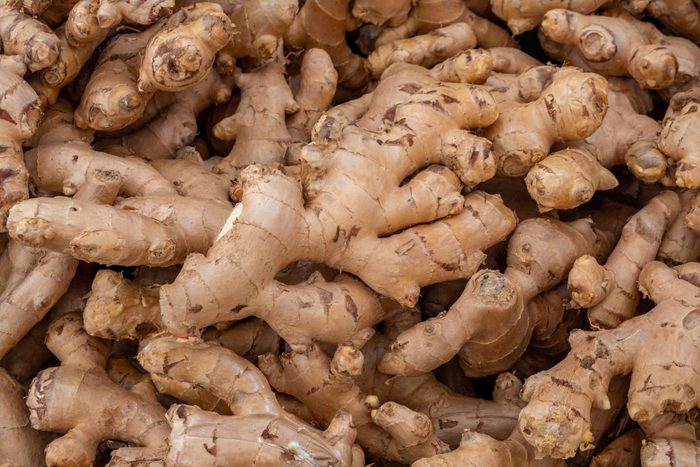
If you want to amp up the healing powers of honey and lemon, add freshly grated ginger root. “Juice the ginger and lemon, and mix with hot water and honey,” suggests BreAnna Guan, ND, a naturopathic physician in Boston. “The lemon helps to break up mucus, while the ginger is stimulating and supports the movement of phlegm. Both can be soothing and help reduce inflammation.”
Dr. Guan points out that this tea also supports the immune system, in addition to soothing a cough.
Peppermint
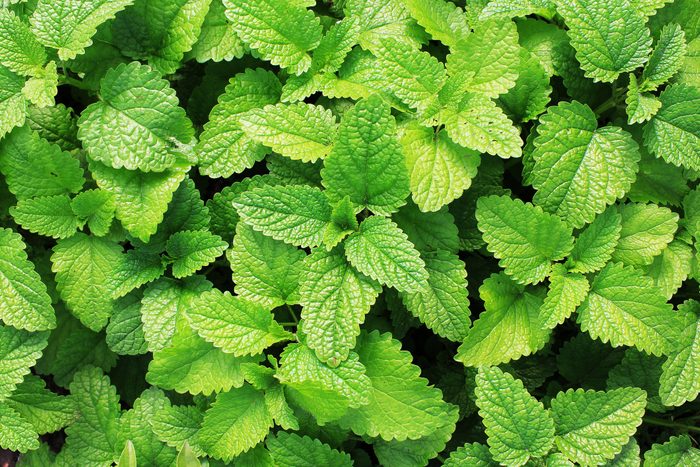
Peppermint is also a popular cough suppressant. “The menthol component of peppermint has been shown to suppress cough when inhaled,” says Carly King, ND, a naturopath in Ontario. “Breathing in the steam from a peppermint tea or diffusing peppermint essential oil may be helpful,” Dr. King adds, pointing out that it’s not recommended for children to inhale peppermint essential oil.
Sucking on a peppermint cough drop may have a similar effect, especially if the cough is due to post-nasal drip. “Peppermint tea is known for its calming effects on the body, making it an ideal remedy for sore throats and coughs,” Dr. Bailey says. “The menthol in peppermint acts as an expectorant, helping loosen mucus from your respiratory tract so that it can be expelled more easily when you cough.”
Salt water gargle
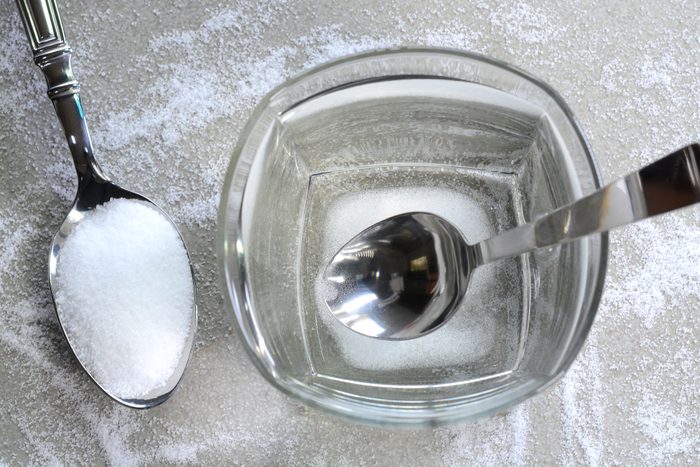
It’s safe to say that your great-grandparents probably gargled with salt water to relieve coughs and sore throats. It’s one of the quickest, easiest and most effective natural cough suppressants. “Gargling with salt water several times daily can reduce the duration of an upper respiratory infection and cough specifically by about 2.5 days,” Dr. King says. “When combined with salt water nasal irrigation, this can also reduce transmission of viruses within a household by about 35%.”
“Simply mix one teaspoon of salt into a cup of warm water before gargling thoroughly several times per day until symptoms subside,” Dr. Bailey says. “The salt helps kill bacteria in your throat by drawing out moisture, while simultaneously reducing swelling and inflammation in the surrounding tissue.”
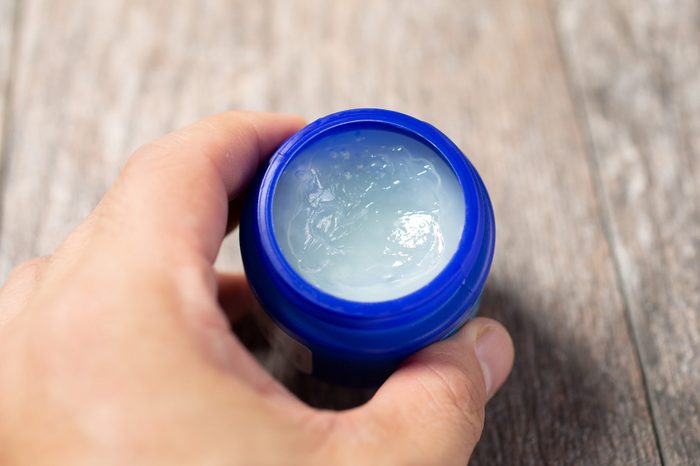
Menthol
As far as old-fashioned natural cough suppressants go, there’s also a good chance your great-grandparents use camphor to suppress coughs, and they probably slathered on the classic Vick’s VapoRub, which has been soothing coughs for 125 years. “Smear Vick’s on the chest, upper back and inner wrists,” suggests Christina Burns, a New York City Doctor of Chinese Medicine, LAc, FABORM, at Naturna.
You can also diffuse eucalyptus essential oil in a vaporizer or humidifier, or just add a couple of drops to your shower floor and inhale. “Eucalyptus relaxes the airways, and less airway spasm equals less cough,” says Jacob Teitelbaum, MD, a long COVID expert and bestselling author of From Fatigued to Fantastic!
5 Long COVID Symptoms That’ll Help Explain the Way You’re Feeling

Chocolate
The fact that chocolate can suppress a cough is good news! When we’re sick, we often crave comfort foods, and there are few things as soothing as a cup of hot cocoa. “Although mechanisms remain unknown, it is thought that theobromine, a compound intrinsic to dark chocolate, might potentially suppress cough,” says Yelena Deshko, ND, a naturopathic physician at Timeless Health Clinic in Toronto.
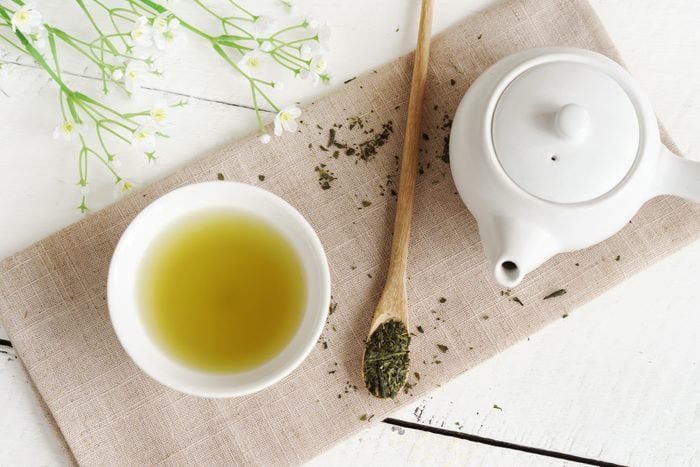
Green Tea
“Green tea is rich in antioxidants and works wonders on numerous health conditions, including those involving congestion such as bronchitis that can lead to chronic bouts of coughing during sleep or throughout the day,” Dr. Bailey says. He suggests adding freshly grated ginger root along with raw honey to your green tea for additional cough-suppressing benefits.
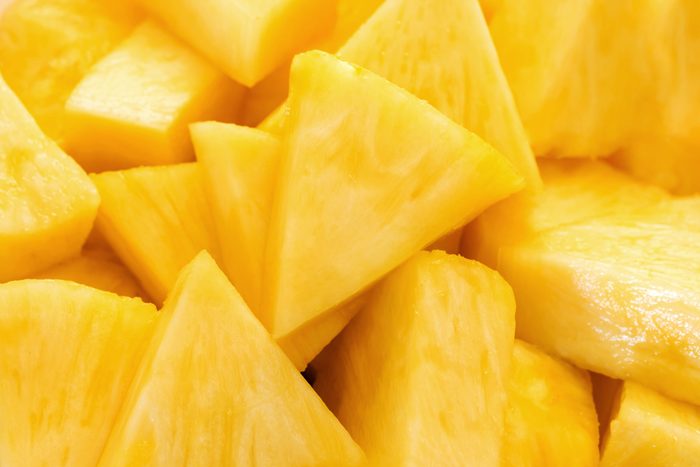
Pineapple
Pineapple contains an enzyme called bromelain, which has anti-inflammatory as well as mucolytic properties, which means that it can help break down mucus and aid in expectoration. “Bromelain has been shown in several studies to be an effective cough suppressant, especially when combined with honey,” Dr. Deshko says. A 2016 Brazilian study backed this up.

Steamed Asian Pear
“Steamed Asian Pear helps to detoxify the body (due to their high fiber and water content), rid the body of mucus, lubricate the throat, soothe sore throats, and relieve coughs,” says Dr. Jenelle Kim, DACM, LaC, founder and formulator at JBK WELLNESS LABS.
Dr. Burns recommends this remedy for dry coughs. “Chop a pear and boil in 500 milliliters of water for 10 minutes,” she says.

Frozen berry and milk smoothie
If your cough feels hot and burning, hot drinks might not do it for you. For these coughs, Dr. Guan recommends a frozen berry and milk smoothie. “Milk and sweet flavors help to increase mucus production and the cool berries can provide much comfort for burning/hot and inflamed cough,” Dr. Guan says.
- Mayo Clinic, “Cough - When to see a doctor”
- Archives of Pediatrics & Adolescent Medicine, “Effect of honey, dextromethorphan, and no treatment on nocturnal cough and sleep quality for coughing children and their parents”
- Jerry Bailey, DC, L.Ac, Certified Nutritionist and Acupuncturist at Lakeside Holistic Health
- BreAnna Guan, ND, a naturopathic physician in Boston
- Carly King, ND, a naturopath in Hamilton, Ontario
- Yelena Deshko, ND, a naturopathic physician at Timeless Health Clinic in Toronto
- Jacob Teitelbaum, MD, a Long Covid expert and bestselling author of From Fatigued to Fantastic!
- Christina Burns, a New York City Doctor of Chinese Medicine, L.Ac, FABORM at Naturna
- Jenelle Kim, DACM, L.Ac., Lead Formulator of JBK Wellness Labs
Originally Published: March 01, 2023

