




7 Best Gluten-Free Beers, According to People With Celiac Disease

Updated: Mar. 17, 2022





Gluten-free beers are a safe drinking option for people with gluten intolerance or sensitivity. We asked people with celiac disease to share their picks.
Our editors and experts handpick every product we feature. We may earn a commission from your purchases.
The case for gluten-free beer
Eight years ago, Heather Hill found out she has celiac disease, an autoimmune condition in which gluten-containing meals triggers an immune response that damages the small intestine.
Suddenly losing access to the foods and drinks that she loved—many of which were tied to childhood memories—was devastating.
Celiac disease turned out to be more than a physical issue. In a world where food is central to friendships and community, cutting out gluten took a mental, emotional, and social toll.
But in the years since her diagnosis, Hill has noticed a slow but steady growth of gluten-free options at restaurants and supermarkets. And that includes beer.
It’s a huge encouragement to Hill and other people who have a gluten intolerance or gluten sensitivity.
“It not only meets a desire, but it gives us the joy of knowing we are seen and understood and welcome,” Hill says. “And isn’t that the best thing to drink to?”
What is gluten?
Gluten is a protein made up of other proteins, primarily gliadin and glutenin, according to the Journal of Gastroenterology and Hepatology.
Gluten can be found in wheat, barley, rye, and triticale.
All wheat-based pasta and grains, including spelt, farro, and durum, contain gluten.
Why is gluten a problem for some people?
There are at least three situations in which gluten becomes a health issue:
- Wheat allergy
- Celiac disease
- Non-celiac gluten sensitivity (NCGS)
Wheat allergy
“An allergy to wheat is usually not an allergy to the gluten protein but to other proteins found in wheat,” says Julie Kennedy, a registered dietitian nutritionist with the celiac disease organization Beyond Celiac. Both she and her daughter have celiac disease.
People with a wheat allergy will react to any foods or drinks containing wheat—including many beers—by breaking out in hives, having trouble breathing, or experiencing rapid-onset itching and swelling.
In short, they will have an allergic reaction. Like peanut allergies, wheat allergies can be life-threatening in some people.
Celiac disease
Celiac disease affects approximately 1 percent of the population, according to E.A. Stewart, an integrative registered dietitian in San Diego and gluten-free recipe developer.
This autoimmune disease is not an allergy at all. Rather, it’s the body’s attack against its own small intestine.
This “serious, genetic autoimmune disease” puts people at risk for malabsorption of nutrients and other health complications (including osteoporosis and infertility), according to Kennedy.
She says that even trace amounts of gluten from cross-contamination (contact with flour on a countertop or cutting board, for instance) can cause serious reactions in people with celiac disease.
The only treatment for celiac disease is a strict gluten-free diet.
Non-celiac gluten sensitivity
NCGS is more common than celiac disease. Stewart estimates that it affects anywhere between 1 and 13 percent of the population.
Symptoms of both celiac disease and NCGS include bloating, abdominal pain, diarrhea, brain fog, and headaches after exposure to gluten.
Though the symptoms are similar, there is no Food and Drug Administration-approved test to diagnose NCGS. In general, it’s thought that people with NCGS have symptoms but not necessarily the intestinal damage seen in those with celiac disease.
Kennedy says severity also differs; some people with NCGS can tolerate small amounts of gluten.
Gluten-removed versus gluten-free beer
Some brewers sell beer derived from barley, rye, or wheat, which has had the gluten removed in the final steps of production.
Kennedy says it’s important for people with celiac disease to avoid these beers.
Trace levels of gluten in the brew might be tolerable for people with NCGS, but it depends on the individual.
When in doubt, look for beers that have been made with 100 percent gluten-free grains. Kennedy says those include sorghum, buckwheat, millet, quinoa, corn, and rice.
Finding the best gluten-free beer
Both Kennedy and Hill have celiac disease, so consuming even tiny amounts of gluten could wreak havoc on their small intestines.
They’re accustomed to seeking out gluten-free options for everything from pizza to beer.
However, Hill says she knows people “often expect gluten-free to not be as good as gluten-full.”
That’s why she set up a blind beer tasting with friends who don’t have celiac disease or gluten sensitivity. They wrote down tasting notes and scores, then averaged their rankings for the very best gluten-free beers.
There are dozens of gluten-free beers on the market, so Kennedy, Hill, and Hill’s friends can’t claim to have sampled them all.
And as is the case with glute-free food or gluten-free wine, your beer preferences might differ from theirs.
Based on Hill’s taste test and Kennedy’s gluten-free clients’ recommendations, here are five strong choices, an honorable mention, and a bonus pick.
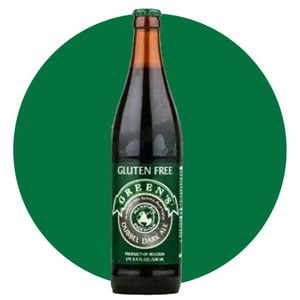
Green’s Endeavour Dubbel Dark Ale
This barley-free Belgian Dubbel looks and feels like Guinness, with a dark coloring and rich, foamy head.
Hill says that though the texture reminds her of Coca-Cola, the flavor is “all chocolaty and caramelly goodness.”
Green’s notes a hint of toffee and brown sugar with a distinct “yeast bouquet,” despite the beer’s lack of gluten.
“This is hands down my favorite GF [gluten-free] beer I’ve ever tried, not to mention my top scorer,” Hill says.
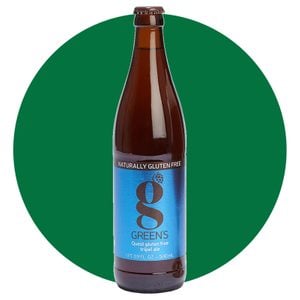
Green’s Quest Tripel Ale
Both Kennedy and Hill recommended this refreshing ale made from millet, buckwheat, brown rice, and sorghum.
Green’s Quest Tripel Ale was also ranked highest by Hill’s friends, who enjoy standard gluten-containing beers.
So how does this gluten-free beer taste? Not exactly like a beer.
The ale is lightly sweet and fruity—almost like a white wine seltzer, according to Kennedy.
While Hill enjoys it with salami or similarly hearty meats, Kennedy says it pairs well with vegetables, citrus, and grilled fish.
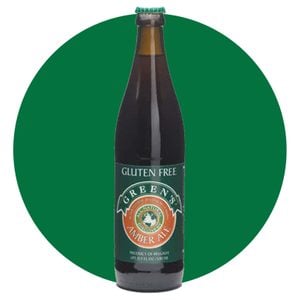
Green’s Discovery Amber Ale
Hill’s third-place pick is also made with millet, sorghum, rice, and buckwheat.
This medium-bodied ale from Green’s is a caramelly, nutty, gluten-free stand-in for easy-drinking mainstays like Fat Tire Amber Ale and Bell’s Amber Ale, both of which contain gluten.
This ale is a perfect accompaniment to gluten-free fish and chips or similarly hearty food, according to Hill.
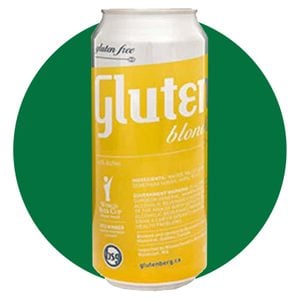
Glutenberg Blonde Ale
If you’re a gluten-free alcohol drinker, you’ve probably heard of Glutenberg. The award-winning Canadian brewery is 100 percent gluten free.
Glutenberg Blonde is a consistently well-rated pale ale with a mild balance of citrus and grain flavors.
Hill says that though she ranked this crisp beer fourth in her taste test, she would probably rate it higher on a hot summer day.
Honorable Mention
Kennedy also recommends trying Glutenberg India Pale Ale.
“This beer is great for those who love traditional IPAs since it tastes very similar,” she says. “However, it is a little bit less hoppy.”
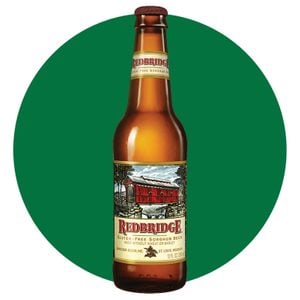
Redbridge Sorghum Beer
Fortunately for gluten-free drinkers, Redbridge Sorghum Beer is easy to find at most major supermarkets. That’s not the case with most of the gluten-free beers on this list.
Kennedy says she and her clients enjoy the mildly sweet, toasted grain flavor topped with “moderate hops.”
Hill ranked this fifth on her list, though she says her friends without celiac disease enjoyed it.
In general, they thought it tasted more like a cider than other beers on the list.
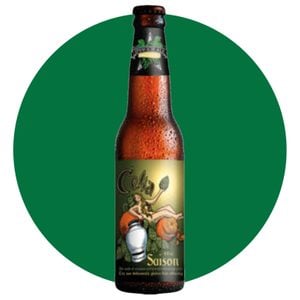
Bonus pick: Ipswitch Celia Saison
Ipswitch’s gluten-free Celia Saison is Belgian inspired with notes of light spice from sorghum and a hoppy finish from Celia hops.
“This beer was rated very high among clients, and it tastes very close to wheat-containing beer [like Blue Moon],” Kennedy says.
What about nonalcoholic gluten-free beers?
Unfortunately, most of the nonalcoholic beers on the market are not certifiably gluten free.
Some are considered “gluten removed,” which could still include traces of gluten. That’s not an option for people with celiac disease or even extreme gluten sensitivity.
None of our experts have found a nonalcoholic, completely gluten-free beer worth drinking.
For nonalcoholic gluten-free imbibing, Stewart suggests trying kombucha, and Hill recommends Giesen nonalcoholic Sauvignon Blanc or Monday Gin.
And if you want to do more taste testing of alcohol-containing drinks, try this gluten-free beer list.
Next, check out the best nonalcoholic gins.


- Journal of Gastroenterology and Hepatology: "What is gluten?"
- Heather Hill, writer and itinerant bookworm who has lived with celiac disease for eight years
- Julie Kennedy, RDN, LDN, registered dietitian nutritionist at Julie Kennedy Nutrition and Beyond Celiac
- E.A. Stewart, RD, integrative registered dietitian and gluten-free recipe developer in San Diego
Originally Published: June 02, 2021

