


10 Weird Reasons Your Pee Smells Funny
Updated: Oct. 11, 2022





Asparagus isn’t the only thing that makes your pee reek.
You may have diabetes
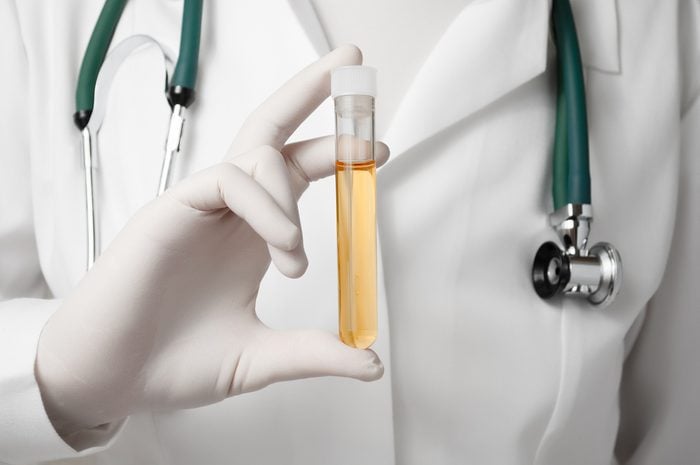
Most of us are aware that in this day and age, urologists run blood tests to check for diabetes. But according to reports from back in the 17th century, urologists would analyze urine samples for diabetes by using three of their own senses: sight, smell, and—dare we say it out loud—taste. Thomas Mayo, a physician in the 1670s, described the taste of diabetic urine as “wonderfully sweet as if it were imbued with honey or sugar.” This was a physician who was extraordinarily dedicated to his patients’ wellness, perhaps—but today, this methodology would probably earn him some startled online reviews.
According to a much more modern doctor’s explanation, here’s the science behind high sugar in the urine of people with diabetes: as excess sugar spills into your urine, it creates a sweet smell. This is according to Stephanie J. Kielb, MD, an associate Professor of Urology, Medical Education and Obstetrics and Gynecology at Northwestern University’s Feinberg School of Medicine in Chicago. “If you have uncontrolled diabetes, your body tries to get rid of extra blood sugar or glucose in the urine, creating the sweet smell,” Dr. Kielb says. When your body isn’t getting the glucose it needs for energy, your body begins to burn fat for energy, which produces ketones. This is dangerous and can lead to diabetic ketoacidosis, the American Diabetes Association warns.
You take vitamins
When you take a vitamin, depending on what it is, it dissolves either in fat or water before your body absorbs it.
Water-soluble vitamins are excreted into your urine, Dr. Kielb says. Not only does this give your urine a strange “multivitamin pill” odor, but it can also turn your urine a fluorescent green or greenish-yellow hue. The good news is that these vitamin-induced urine smells are harmless, so you can keep taking your daily vitamin supplements. Here are the vitamin brands that doctors trust most.

You live in a nursing home or just got out of the hospital
If your urine smells like metal, you might have a pseudomonas infection. These infections are commonly found in hospital or nursing home patients because the bacteria that cause it (and, in turn, give your pee a metallic scent) thrives in those environments. Sick or elderly people with compromised immune systems are particularly susceptible. “Once there’s a bacteria in the hospital or in the nursing home, it hangs around,” says Craig Comiter, MD, a urologist for Stanford Health Care in Palo Alto, CA. “Once it gets there, it stays there. It’s part of the flora bacterial environment.”
Doctors Say Knowing About This Vaccine Could Cut Your Cancer Risk Significantly
You’re dehydrated
If your pee smells funny in a very distinct way, it may be time to drink up. Your urine can get super concentrated and take on a pungent urine smell similar to ammonia if you don’t drink the recommended seven to eight glasses of water a day. Your body needs water to dilute waste products in your urine. “People should strive to have urine that’s a light yellow color,” says William Brant, MD, a urologist at the University of Utah Health Care in Salt Lake City, UT. “If it’s dark yellow or an amber color, they’re probably not drinking enough water.”
Are you dehydrated? Read The 3 Best Hydrating Beverages That Aren’t Water, from a Certified Sports Dietitian
You don’t pee in a toilet
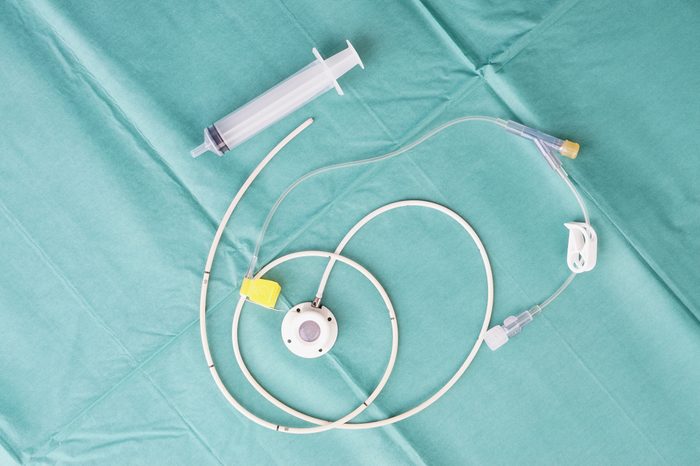
People who use catheters and urine drainage bags may complain of an odor in their bags. “That bagged urine really smells because once it’s out of you, the bacteria flourish,” says Dr. Comiter. “It’s not dangerous at all. It’s just the nature of an unsterile urine specimen.”
He suggests dropping an aspirin in the bag because salicylic acid neutralizes the pungent smell. If the odor persists or your urine becomes cloudy, seek a physician’s care.
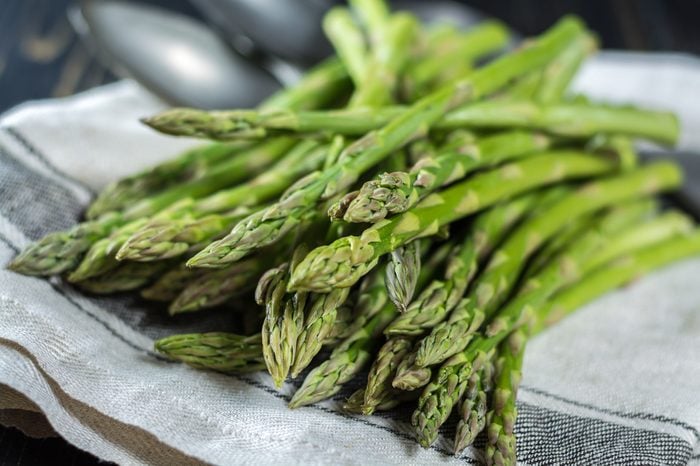
You eat a hearty helping of vegetables
Vegetables are good for your body, but don’t be alarmed if they make your urine smell like whatever you ate. Asparagus is a big culprit for smelly urine; in fact, your pee can start smelling like asparagus just 20 minutes after you eat it.
Other foods, including Brussels sprouts, onions, cabbage, and turnips can also make your pee smell funky because of a metabolic byproduct called methyl mercaptan, a gas with a putrid, sulfurous smell that emerges when your body breaks down these vegetables. “The vegetable is still healthy and a good part of your diet,” says Dr. Brant. “These chemicals just happen to be things that we react to.” Try drinking more water to mute the smell of your urine. A well-balanced diet is just one of the many surprising things your pee can reveal about your health.
You don’t take enough trips to the bathroom
If you need to go, let it flow. Your pee smells funny (think old and smelly) when you frequently hold it in throughout the day. Dr. Comiter refers to this condition as “teacher’s bladder” or “trucker’s bladder” because those are the people who tend to hold it in a lot since they don’t have as much time in the day to go to the bathroom due to their hectic schedules. “If you’re prone to infections or bacteria, then the bacteria will grow and grow until you pee them out,” says Dr. Comiter. “If you’re holding on to it, you will get extra pungent urine.”

You may have a urinary tract infection
Urinary tract infections can cause a foul odor that some patients describe as rotten food or sweaty socks. Bad bacteria that snuck its way into your bladder through your urethra often causes these strange odorous smells. There’s also another condition called asymptomatic bacteria that can cause your pee to smell but doesn’t necessarily mean you have a UTI. “About one-third of women over the age of 65 can have bacteria in the urine on and off,” says Dr. Comiter. “But it doesn’t represent a risky infection because it’s just bacteria that flourishes in the urine and then disappears.”
If you experience other symptoms like a burning sensation while peeing or a fever, see a doctor. Keep in mind that a UTI is also just one of the 9 medical reasons you have to pee all the time.
You douche too much
The only thing you should be using to cleanse your vaginal area is water. Douching with fluids or chemicals will kill the good bacteria and allow bad bacteria to move in instead. “The vagina, the urine, a lot of your body is supposed to have a certain type of acidity,” says Brant. “If you mess with the acidity, things don’t work out very well.”
Make sure you steer clear of douching and 13 other things your bladder wants you to know.

Your commitment to Keto
Keto (low-to-no carb, high-fat, protein-heavy diets) are all the rage for weight loss. They work by forcing your body to burn fat for fuel instead of relying on glucose from carbs for energy. “A keto diet induces ketosis which is a metabolic state where your body uses fat for energy,” says Dr. Kielb.”During this state, your urine and breath may both have an odor.” This high-fat, low-carb eating plan has its fans—and detractors. Here’s what the experts say about eating keto for the long-term.
Get The Healthy @Reader’s Digest newsletter. Keep reading:
- The 3 Best Hydrating Beverages That Aren’t Water, from a Certified Sports Dietitian
- Eating More of This Can Improve Your Gut Health, Says New Science
- The 4 Best Habits to Lower Your Heart Disease Risk, from a California Cardiologist
- Here’s How Much Water You Really Need in a Day, with Nutritional Scientists’ Latest Wisdom
- Craig Comiter, MD, urologist for Stanford Health Care in Palo Alto, CA.
- William Brant, MD, urologist at the University of Utah Health Care in Salt Lake City, UT.
- Stephanie J. Kielb, MD, an associate Professor of Urology, Medical Education and Obstetrics and Gynecology (Female Pelvic Medicine and Reconstructive Surgery (Urogynecology)) at Northwestern University's Feinberg School of Medicine in Chicago.
- Diabetes Spectrun: "From Thebes to Toronto and the 21st Century: An Incredible Journey.
- American Diabetes Association: "DKA (Ketoacidosis) & Ketones."
 Medically reviewed by
 Originally Published: September 18, 2019
