


9 Reasons You Keep Waking Up in the Middle of the Night


Updated: Jul. 23, 2024





When a bad dream isn’t to blame, consider one of these less obvious reasons you can’t sleep through the night.
Why you wake up in the middle of the night
It’s frustrating when one minute you’re asleep and the next you’re staring at your alarm clock totally awake in the middle of the night. While it’s not always obvious why you’re surfaced from a slumber, there are certain things that increase the likelihood that you’ll have mid-sleep awakenings (besides noisy neighbors or a blaring car alarm). Learn the common culprits that disturb your sleep—and how to fall back asleep after waking up in the middle of the night.
Your skin is itchy and irritated
Got eczema? The irritating skin condition can jeopardize your sleep. “This disease can have a serious impact on patients’ quality of life and overall health, both physically and mentally,” says Jonathan Silverberg, MD, PhD, an adjunct associate professor of dermatology and medical social sciences at the Northwestern University Feinberg School of Medicine in Chicago. He notes that eczema can bring about immune system changes and inflammatory responses that impede sleep. Plus, it’s common for eczema patients’ itching to get worse in the evening, rendering them unable to fall asleep well or causing them to wake up often. If your eczema might be affecting your ability to sleep well, it’s a good idea to discuss treatment options with your doctor. (If you keep waking up in the middle of the night, your brain could also be in trouble.)
Your legs are twitchy
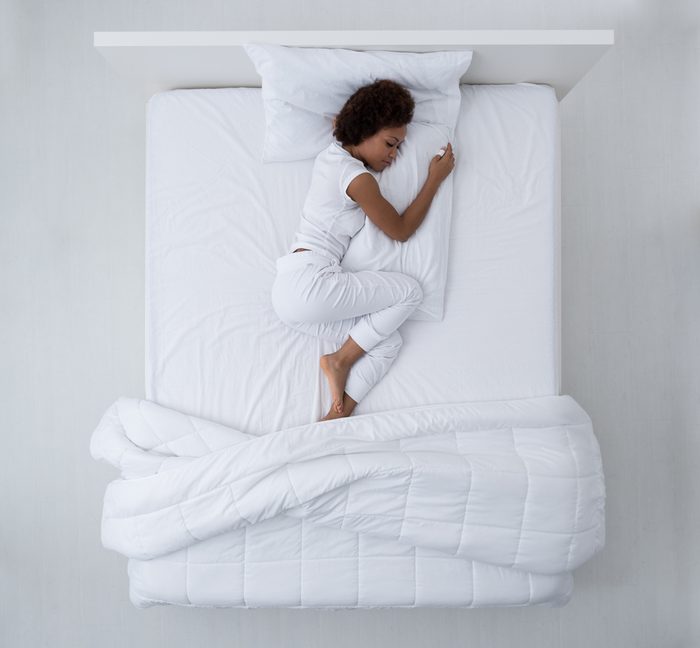
According to the National Sleep Foundation, about one in 10 Americans has restless legs syndrome (RLS), a sleep-related movement disorder that is known best for its overwhelming and often unpleasant urges to move the legs while at rest. RLS symptoms tend to be most prominent in the evening, waking you up regularly and interfering with your sleep quality. A study published in 2016 in Reactions Weekly suggests a possible link between common allergy medications and increased RLS symptoms. “Patients with restless legs syndrome already have difficulty sleeping as their symptoms tend to worsen at night or with rest, but sedating antihistamines, such as Benadryl, can intensify the symptoms,” says neurologist William Ondo, MD, director of the Movement Disorder Clinic at Houston Methodist Hospital in Houston. A doctor can assess any medications you take or test for vitamin deficiencies that could be making your RLS symptoms worse. (Here are 8 home remedies for restless legs syndrome worth trying.)
Your bedroom is too hot
Room temperature and a good night’s sleep are inextricably linked. Your body needs a dip in body temperature to cue the onset of sleep; a too-warm room can make you struggle to fall or stay asleep, or make you wake up in the middle of the night. The National Sleep Foundation recommends that you sleep in a cool room that’s approximately 65 degrees. Their experts maintain that this temperature is typically conducive to a restful night. However, they also suggest experimenting: Various settings affect people differently, so find a temperature on the cool side that’s best for you. (Sleeping in a room with this temperature could boost your metabolism.)
Your mattress is firm (VERY firm)
It’s a common myth that a firmer mattress and better sleep go hand in hand. “The ability to have the mattress conform to your body is important to maintain proper head, neck and shoulder alignment,” says Pete Bils, a vice president of sleep science and research with Sleep Number in Minneapolis, Minnesota. “Mattresses that are overly firm create high-pressure points in the hips and shoulders and poor support in the lower back, which leads to tossing and turning to relieve those pressure points—and thus a restless night of sleep.” Don’t select your mattress based on the long-held notion that “firmer is better.” Most people wait way too long to replace their mattress; if you’re in the market for a new one, take your time to do research and find a level of firmness that feels truly comfortable. Take stores and companies up on their offer to test the mattress in your home for a period of time; if you find you’re not sleeping well, keep playing Goldilocks. (These are nine myths about sleep you need to stop believing if you want to have a great night’s rest.)
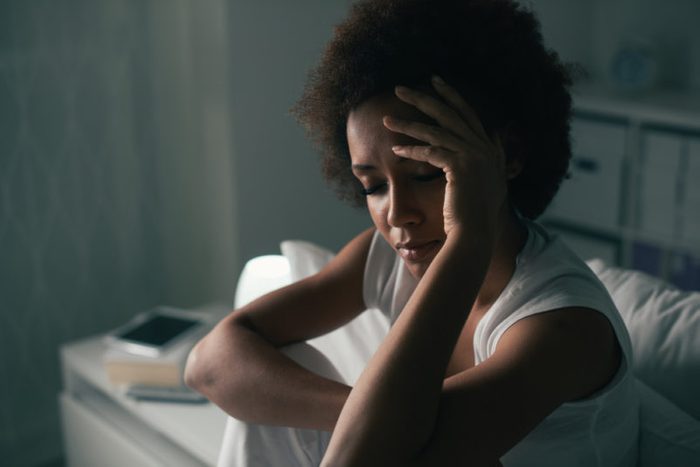
You have sleep apnea (but you might not even know)
If you wake up often throughout the night, it’s possible that you may have these symptoms of obstructive sleep apnea. This condition usually involves loud snoring, often coupled with moments of sporadic pauses of breathing during sleep. It occurs when the muscles in the back of your throat relax to the point of not being able to get a proper breath back in. Your brain picks up on this breathing problem and, in an attempt to appropriately open your airway, wakes you from your slumber. What results is often a loud snore or snort during this reawaking episode. This happens so often that you end up experiencing numerous waking moments instead of the solid night’s sleep you need.
Talk to your doctor if you suspect you have obstructive sleep apnea—or if your bedmate insists you do! The hallmark symptom: excessive daytime sleepiness. You may be referred to a sleep specialist who may perform blood-oxygen level tests while you sleep or ask you to do a home sleep test to monitor things like your breathing patterns, oxygen levels, and heart rate. (You should also make sure you know these 12 sleep disorders that aren’t sleep apnea that could be keeping you awake at night.)
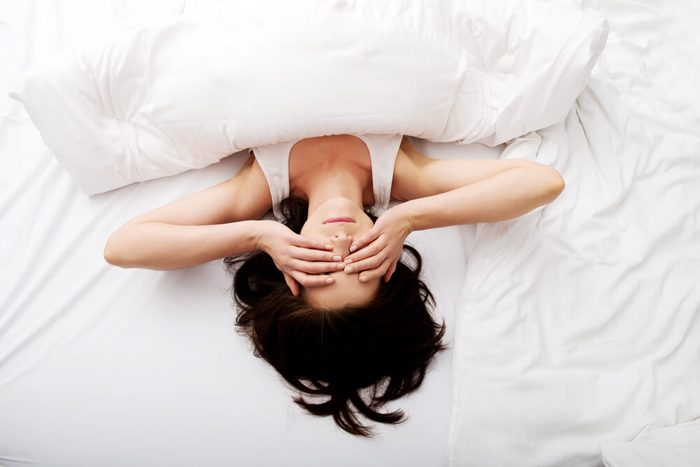
You’re stressing out big time
Stress is a major contributor to insomnia (no surprise!). If you’re constantly worrying, whether it’s about your job, finances, the upcoming election, or a future vacation (yes, happy occasions can also cause stress), chances are, you’re experiencing your share of waking up in the middle of the night. To reduce stress, try to squeeze in more regular exercise—even a 10-minute walk during lunch or after dinner can help. A review of studies published in 2017, in Advances in Preventive Medicine, found that exercise improves sleep quality or duration.
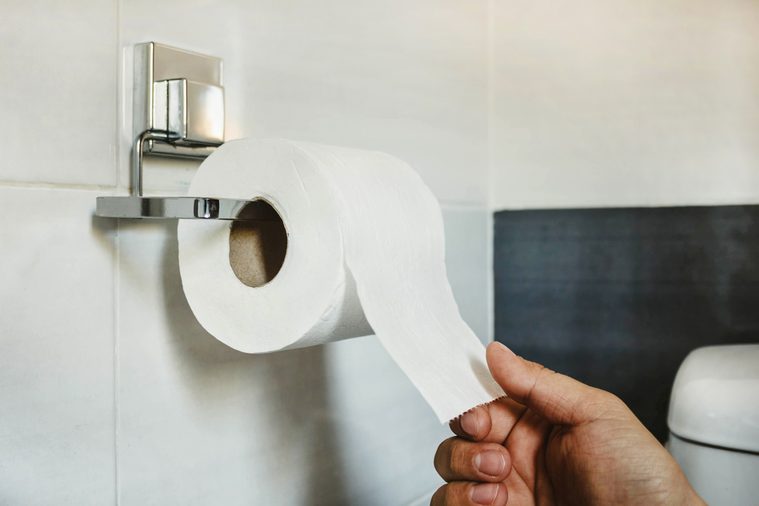
You keep going to the bathroom
The need to pee in the middle of the night can definitely be part of the reason why you don’t get much sleep. But having to use the bathroom every single night could be the result of more than just drinking lots of water before bed. It could also be a sneaky symptom of diabetes or a urinary tract infection. Check out these 9 medical reasons you need to pee all the time.

You have alcohol in your system
A study published in 2019 in the journal Sleep found that alcohol use within four hours of bedtime can sabotage sleep. Here’s why: Drinking alcohol can shorten the time it takes for you to fall asleep, but the amount of time you sleep is disrupted. Your sleep cycle starts in non-rapid eye movement sleep and then goes into a short period of rapid eye movement (REM) sleep. By drinking alcohol, you’ll spend more time in a deep sleep rather than in REM sleep. And REM sleep, which takes up 20 to 25 percent of your sleep, helps with concentration, memory, and motor skills. All of which can be affected negatively if you don’t get enough of it. (These are 13 secrets doctors want you to know about getting better sleep.)

You had too much screen time
Your sleep schedule could be seriously messed up if you like to scroll through your phone right before bed. That’s because smartphones—like laptops, tablets, and televisions—emit blue light, a type of light that the brain interprets as daylight. The blue light actually suppresses melatonin, a hormone that affects circadian rhythm and should increase when you are preparing for bedtime. (Here’s what experts say about whether blue light-blocking glasses work.) The result: Your brain feels stimulated. This is fine if you’re looking at your smartphone’s screen at noon, but if you’re looking at the screen at midnight, your brain is going to get confused and think that the sun is out—making it even tougher to fall asleep. (Read about one woman’s experience wearing blue light glasses for a week.)
- National Eczema Association, "Why People with Eczema Have Trouble Sleeping (and What to Do About It)"
- Jonathan Silverberg, MD, PhD, an adjunct associate professor of dermatology and medical social sciences at the Northwestern University Feinberg School of Medicine in Chicago
- National Sleep Foundation, "Restless Legs Syndrome (RLS)"
- Reactions Weekly, "Popular OTC antihistamines worsen restless legs syndrome"
- William Ondo, MD, director of the Movement Disorder Clinic at Houston Methodist Hospital in Houston
- National Sleep Foundation, "What Temperature Should Your Bedroom Be?"
- Pete Bils, a vice president of sleep science and research with Sleep Number in Minneapolis, Minnesota
- The National Institute of Neurological Disorders and Stroke, "Sleep Apnea Information Page"
- Advances in Preventive Medicine, "Interrelationship between Sleep and Exercise: A Systematic Review"
- Sleep, "Evening intake of alcohol, caffeine, and nicotine: night-to-night associations with sleep duration and continuity among African Americans in the Jackson Heart Sleep Study."
- Harvard Health Publishing, "Blue light has a dark side"
 Medically reviewed by
 Originally Published: July 24, 2018

