




The Covid Booster and Flu Shot: Can You Get Both at Once? Doctors’ Advice for 2023-2024


Updated: Aug. 21, 2023





Learn what virus specialists recommend as you head out for your seasonal vaccinations: "This is a small price to pay for protection," a leading infectious disease doctor says.
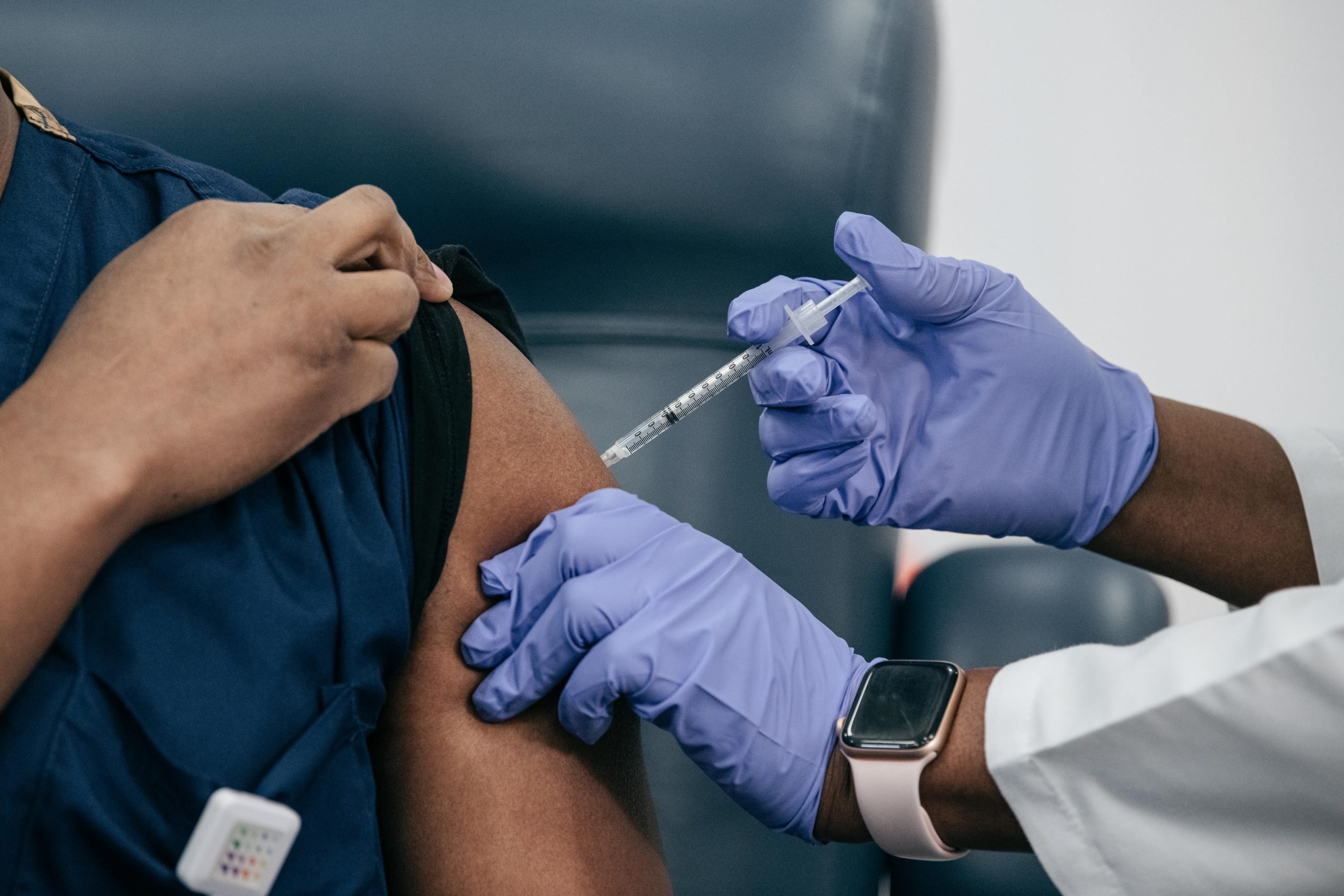
Only about half of Americans get the seasonal flu shot each year, according to 2021 data from the Centers for Disease Control and Prevention (CDC). Also, a 2021 survey from the National Foundation for Infectious Diseases shows that among those who are not getting the flu vaccine, one in four is at high risk for flu-related complications. These trends concern many medical professionals—especially as Covid’s annual patterns remain a question mark and RSV (respiratory syncytial virus) is circulating again.
While the flu vaccine doesn’t completely prevent you from getting sick, data from the CDC show that last year’s shots were 54% effective in reducing serious cases requiring hospitalization and 71% effective in protecting children and teens from catching the flu. And, as new Covid variants continue to emerge, the CDC now recommends everyone over six months old get the up-to-date Covid vaccine when it becomes available this fall.
So, as we move into the 2023-2024 flu season…can you kill two (or more) viruses with one clinic visit? Here’s what some of the nation’s leading infectious disease experts told us.
Experts say these 12 items will help you weather this year’s flu season
Can you get multiple vaccines at once?
The technical term for getting multiple vaccines together is “vaccine co-administration,” though some doctors may refer to it as “layering” vaccines. Medical professionals say the answer to whether this is a good idea depends largely on your age and health status, the vaccines you’re considering, how urgent the need is to start building protection, and personal preferences.
As a general rule, there are very few vaccines that can’t be co-administered, says L.J Tan, MS, PhD, an infectious disease specialist and the chief policy and partnership officer at the Immunization Action Coalition in St. Paul, MN. However, Dr. Tan says, there are some vaccines that definitely don’t belong together—adding that when vaccines are co-administered, they should go in different anatomic sites (locations on the body). “It can be in the same arm if they are spaced an inch apart,” he says.
This allows your doctor or pharmacist to identify which vaccine caused a reaction, should one occur.
Here, medical pros and researchers list which vaccines can be given at the same time, and which can’t. (Note: While the following provides general suggestions, always consult with a licensed healthcare provider before making a decision specifically for you or your child.)
Beat the upcoming flu season with daily health and wellness updates in The Healthy @Reader’s Digest newsletter

Flu shot + Covid-19 shots
Can you get them at the same time? Yes
“We’re still kind of learning what the seasonal Covid pattern is going to be,” says Ryan Maves, MD, professor of infectious diseases at Wake Forest School of Medicine and chair of the American College of Chest Physicians’ COVID-19 Task Force. About 97% of the country has Covid antibodies at this point, “so the question is: Is [the Covid vaccine] going to be like a flu shot every year? Is that going to be routine now? Probably.”
Dr. Maves adds that Covid variants continue to change more rapidly than the flu does. So the official recommendation is that everybody stay up-to-date with the latest Covid vaccine as it becomes available, which should be by the end of September 2023.
When Covid-19 vaccines were first rolling out in the United States, the U.S. Centers for Disease Control and Prevention (CDC) recommended waiting two weeks between the shots and other immunizations as a precaution, but the agency has changed course and now says you can do both at once.
“There were some concerns early on given the newness of the Covid-19 vaccines, but now we know that it is safe to get both at the same time,” says Mohammad Sobhanie, MD, an infectious disease expert at the Ohio State University Wexner Medical Center in Columbus, OH.
Can you test positive for Covid-19 after getting the vaccine?
What about kids?
Now that Covid-19 vaccines are available for children as young as six months, kids can get the Covid-19 and flu shot in the same visit, Dr. Tan says.
Covid-19 booster + flu + pneumonia
Can you get them all at the same time? Yes
If you are getting the latest dose of the Covid-19 vaccine and haven’t had your flu or pneumonia shots yet, you can get them all at the same time.
“Get the more reactive one in one arm (the Covid-19 shot) and the flu and pneumonia vaccines spaced an inch on the other arm,” Dr. Tan says. “Yes, both arms may hurt, but this is a small price to pay for protection against three deadly diseases,” he notes.
Get the best protection this season and avoid these 8 mistakes that can mess up your flu shot
Covid-19 booster + flu + RSV
Can you get them all at the same time? Yes
RSV is a respiratory infection that usually causes mild, cold-like symptoms—but it can be serious in older adults and young children. “We worry a lot about RSV and little kids,” Dr. Maves says. “And we might still be seeing the aftershocks of [the pandemic],” with more children being exposed to RSV for the first time.
While there’s still no pediatric vaccine, in May, the US Food and Drug Administration (FDA) approved an RSV vaccine recommended for adults over age 60 and immunocompromised individuals. Dr. Maves says that if there is a lot of vaccine uptake among these high-risk groups, we may see a reduction in RSV-related hospitalizations and deaths.
While more data are needed to gain a sense of what the RSV vaccine’s impact will be, Dr. Maves says there is evidence that getting the flu, Covid, and RSV shots together is safe.
An RSV Vaccine Has Received 2023 FDA Approval for Older Adults
Flu shot + Hepatitis A vaccine
Can you get them at the same time? Yes
Other inactivated and/or live virus vaccines such as the flu shot can be given at the same time as the Hep-A vaccine. Hepatitis A is a highly contagious liver infection that’s preventable by getting the hepatitis A vaccine.
The CDC recommends hepatitis A shots for children aged 12 to 23 months, children and adolescents aged two to 18 years who have not already received hepatitis A vaccines, and people at increased risk for hepatitis A or severe disease from hepatitis A infection.
Pregnant women at risk for hepatitis A or for severe outcome from hepatitis A infection should consider vaccination, the CDC states. Risk for hepatitis A increases with international travel, illicit drug use, and homelessness. Men who have sex with other men may also be at increased risk for Hepatitis A.
Here are 15 suprising ways to prevent colds and flu
Flu + pneumonia vaccines
Can you get them at the same time? Yes
Len Horovitz, MD, pulmonary (lung) specialist at Lenox Hill Hospital, New York City, says you can administer either pneumonia vaccine (PCV13 or PPSV23) and the flu shot during the same visit.
In general, the CDC recommends pneumonia vaccines for young kids, older adults, and certain at-risk people. Pneumovax (PPSV23) protects against 23 common types of pneumococcus, and Prevnar (PCV13) protects against 13 types.
Is your upper respiratory infection walking pneumonia?
Shingles shot + pneumonia (or any other vaccine)
Can you get them at the same time? Not advisable.
Shingles, a painful rash caused by a reactivation of the chickenpox virus, is preventable. The CDC recommends that anyone over 50 should receive two doses of the shingles vaccine.
Dr. Horovitz isn’t a fan of combining a shingles shot with any other type of vaccine. “Ten percent of people will be really sick from a shingles shot, and their arm will really hurt, so I don’t like to layer shingles vaccines,” he says.
Doctors say this vaccine may reduce your cancer risk
PCV-13 + Meningococcal conjugate vaccine
Can you get them at the same time? No
You can’t give the PCV13 pneumonia shot with a meningococcal conjugate vaccine, as they may interfere with your body’s immunologic response to PCV13, the CDC warns. There are two meningitis vaccines available in the United States: Meningococcal conjugate or MenACWY vaccines. There’s also a vaccine against meningitis B. All 11- and 12-year-olds should get a MenACWY vaccine, with a booster dose at age 16.
Learn which 1980s TV icon is vaccinating her kids against meningitis
Both pneumonia vaccines: PCV13 + PPSV23
Can you get them at the same time? No
Some people should get both pneumonia shots for protection against all strains of this lung infection, but not during the same visit, the CDC cautions.
On mixing and matching Covid-19 vaccines
This is different from getting multiple vaccines in the same sitting.
“If you are in a location and can get your third shot or Covid-19 booster, and the type you received for your first two shots in the series is not available, it’s reasonable to receive the other type as a booster,” Dr. Sobhanie says.
This only applies to the Pfizer and Moderna mRNA Covid-19 vaccines.
Here’s what doctors want you to know about Covid booster side effects
The bottom line
Dr. Horovitz suggests you keep copious records of all the vaccines you receive, along with dates, to make sure you stay on top of your medical records and ahead of these preventable diseases.
Get The Healthy @Reader’s Digest newsletter and follow The Healthy on Facebook and Instagram. Keep reading:



- L.J. Tan, MS, PhD, chief, policy and partnership officer, Immunization Action Coalition, St. Paul, Minnesota
- U.S. Centers for Disease Control and Prevention (CDC): "Hepatitis A Vaccination"
- CDC: "Interim Clinical Considerations for Use of COVID-19 Vaccines Currently Approved or Authorized in the United States"
- Mohammad Sobhanie, MD, infectious disease expert, the Ohio State University Wexner Medical Center, Columbus
- U.S. Food and Drug Administration: "FDA Authorizes Pfizer-BioNTech COVID-19 Vaccine for Emergency Use in Children 5 through 11 Years of Age"
- Len Horovitz, MD, pulmonary specialist, Lenox Hill Hospital, New York City
- CDC: "Shingles: Vaccination"
- CDC: "Administering Pneumococcal Vaccines"
 Medically reviewed by
 Originally Published: November 03, 2021


